Saturday, 22 February 2014

Supernova

                                                             SUPERNOVA!!

Definition: A star that suddenly increases greatly in brightness because of a catastrophic explosion that ejects most of its mass.

Or

The explosive death of a massive star whose energy output causes its expanding gases to glow brightly for weeks or months. A supernova remnant is the glowing, expanding gaseous remains of a supernova explosion.


     ROMA – Una “fabbrica” di polveri รจ stata scoperta in una supernova
 dal telescopio Alma dell’Eso,
 Osservatorio Europeo Meridionale.
 La supernova chiamata

Nova means "new" in Latin, referring to what appears to be a very bright new star shining in the celestial sphere; the prefix "super-" distinguishes supernovae from ordinary novae which are far less luminous. The word supernova was coined by Walter Baade and Fritz Zwicky in 1931.

More than five supernovas have been observed to have occurred in our galaxy in the last thousand years, including the "guest star" in Taurus described by Chinese astronomers in 1054; Tycho's star in Cassiopeia, observed by Tycho Brahe in 1572; and Kepler's supernova in 1604. In 1885 the first extragalactic supernova was discovered telescopically in the Andromeda Galaxy

; some 700 others have been observed since. In 1987 Supernova 1987A appeared in the Large Magellanic Cloud. It was the first supernova visible to the unaided eye since 1604, and its eruption marked the first time that neutrinos were detected on earth from such an event (see neutrino astronomy


Popular post: FAST FOOD IS NOT MAIN CRIMINAL FOR CHILDREN FAT

Imagine living on a planet with seasons so erratic you would hardly know whether to wear Bermuda shorts or a heavy overcoat. That is the situation on a weird, wobbly world found by NASA's planet-hunting Kepler space telescope.


The planet, designated Kepler-413b, precesses, or wobbles, wildly on its spin axis, much like a child's top. The tilt of the planet's spin axis can vary by as much as 30 degrees over 11 years, leading to rapid and erratic changes in seasons. In contrast, Earth's rotational precession is 23.5 degrees over 26,000 years. Researchers are amazed that this far-off planet is precessing on a human timescale.
Kepler 413-b is located 2,300 light-years away in the constellation Cygnus. It circles a close pair of orange and red dwarf stars every 66 days. The planet's orbit around the binary stars appears to wobble, too, because the plane of its orbit is tilted 2.5 degrees with respect to the plane of the star pair's orbit. As seen from Earth, the wobbling orbit moves up and down continuously.
Kepler finds planets by noticing the dimming of a star or stars when a planet transits, or travels in front of them. Normally, planets transit like clockwork. Astronomers using Kepler discovered the wobbling when they found an unusual pattern of transiting for Kepler-413b.
"Looking at the Kepler data over the course of 1,500 days, we saw three transits in the first 180 days -- one transit every 66 days -- then we had 800 days with no transits at all. After that, we saw five more transits in a row," said Veselin Kostov, the principal investigator on the observation. Kostov is affiliated with the Space Telescope Science Institute and Johns Hopkins University in Baltimore, Md. The next transit visible from Earth's point of view is not predicted to occur until 2020. This is because the orbit moves up and down, a result of the wobbling, in such a great degree that it sometimes does not transit the stars as viewed from Earth.
Astronomers are still trying to explain why this planet is out of alignment with its stars. There could be other planetary bodies in the system that tilted the orbit. Or, it could be that a third star nearby that is a visual companion may actually be gravitationally bound to the system and exerting an influence.
"Presumably there are planets out there like this one that we're not seeing because we're in the unfavorable period," said Peter McCullough, a team member with the Space Telescope Science Institute and Johns Hopkins University. "And that's one of the things that Veselin is researching: Is there a silent majority of things that we're not seeing?"
Even with its changing seasons, Kepler-413b is too warm for life as we know it. Because it orbits so close to the stars, its temperatures are too high for liquid water to exist, making it inhabitable. It also is a super Neptune -- a giant gas planet with a mass about 65 times that of Earth -- so there is no surface on which to stand.
Ames is responsible for the Kepler mission concept, ground system development, mission operations and science data analysis. NASA's Jet Propulsion Laboratory in Pasadena, Calif., managed Kepler mission development. Ball Aerospace & Technologies Corp. in Boulder, Colo., developed the Kepler flight system and supports mission operations with the Laboratory for Atmospheric and Space Physics at the University of Colorado in Boulder. The Space Telescope Science Institute in Baltimore archives, hosts and distributes Kepler science data. Kepler is NASA's 10th Discovery mission and was funded by the agency's Science Mission Directorate.

solar system map.

More than 400 years after its discovery by Galileo, the largest moon in the solar system has finally claimed a spot on the map.


A team of scientists led by Wes Patterson of the Johns Hopkins Applied Physics Laboratory (APL), Laurel, Md., and Geoffrey Collins of Wheaton College, Norton, Mass., has produced the first global geologic map of Ganymede, a Galilean moon of Jupiter. Published by the U.S. Geological Survey, the map technically illustrates the varied geologic character of Ganymede's surface, and is the first complete global geologic map of an icy, outer-planet moon.
Patterson, Collins and colleagues used images from NASA's Voyager and Galileo missions to create the map. It's only the fourth of its kind covering a planetary satellite; similar maps exist for Earth's moon as well as Jupiter's moons Io and Callisto.
"By mapping all of Ganymede's surface, we can more accurately address scientific questions regarding the formation and evolution of this truly unique moon," says Patterson, a planetary scientist.
Since its discovery in January 1610, Ganymede has been the focus of repeated observation, first by Earth-based telescopes, and later by flyby missions and spacecraft orbiting Jupiter. These studies depict a complex icy world whose surface is characterized by the striking contrast between its two major terrain types: the dark, very old, highly cratered regions; and the lighter, somewhat younger (but still ancient) regions marked with an extensive array of grooves and ridges.
With a diameter of 3,280 miles (5,262 kilometres), Ganymede is larger than both planet Mercury and dwarf planet Pluto. It's also the only satellite in the solar system known to have its own magnetosphere. The map details geologic features of the moon that formed and evolved over much of our solar system's history. These features record evidence of Ganymede's internal evolution, its dynamical interactions with the other Galilean satellites, and the evolution of the small bodies that have impacted Ganymede's surface.
The new chart will be a valuable tool for researchers to compare the geologic characters of other icy moons, since almost any type of feature that is found on other icy satellites has a similar feature somewhere on Ganymede. And with a surface over half as large as all the land area on Earth, Ganymede offers a wide variety of locations to observe. "Ganymede also shows features that are ancient alongside much more recently formed features, adding historical diversity in addition to geographic diversity," Collins says.
Along with Collins and Patterson, the Ganymede mapping team also includes Louise Prockter of APL; James Head, Brown University, Providence, R.I.; Robert Pappalardo, NASA's Jet Propulsion Laboratory, Pasadena, Calif.; Baerbel Lucchitta, USGS, Flagstaff, Ariz.; and Jonathan Kay, University of Idaho. NASA funded the project through its Outer Planets Research and Planetary Geology and Geophysics programs


Saturday, 15 February 2014

Dolphin will get the right of man!!!

Dolphin becomes an important issue in Romania parliament.!


Dolphine is not Porposic more!

In Romania Parliament a politics social worker name Rimes Sonia (39) passed a bill. In this bill he mentioned the dolphin as “man who is not human”
Actually dolphin is very intelligent and has much personality.

For that reason it was mentioned like that. In next week it will be discuses. If this bill passes the dolphin will get the right of human. If anyone kills any dolphin he will punished as a human killer. And no one will be able to use dolphin in entertainment show
Sonia said that the aim of this bill is top safe the dolphin of the sea of Krishna.

Oskar winner movie builder Loi Saihoos send a letter to Sonia and corroborate his bill. He made a video named “THE COVE “in 2009 in chase of dolphin

Wednesday, 22 January 2014

Hydrogen Become Fuel!!


       Hydrogen Become Fuel!!


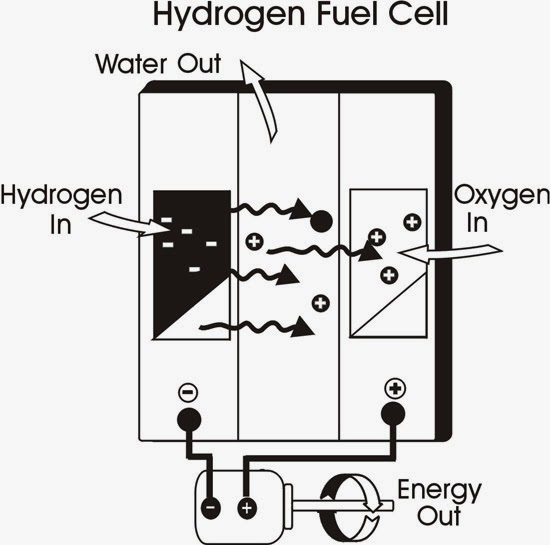
 Hydrogen is the first element on the periodic table, making it the lightest element on earth. Since hydrogen gas is so light, it rises in the atmosphere and is therefore rarely found in its pure form, H2. In a flame of pure hydrogen gas, burning in air, the hydrogen (H2) reacts with oxygen (O2) to form water (H2O) and releases heat. Other than water, hydrogen combustion may yield small amounts of nitrogen oxides.
Gasoline fuel polluted the environment. But since 1970 Hydrogen become the alternative fuel. But it can’t work successfully only for 2 reason!

The reasons are:

1.     Storage Problem.
2.     Commercial production.

But now the team of Lawrence Berkeley National Laboratory (Berkeley Lab), Department of Energy (DOE), has discovered a new material called air stable magnesium nanocomposites. This material can store Hydrogen without complex methodology.

Sun give us electrical power. But it can’t give the power of fuel. The hydrogen will complete the gap. It will produce both kinds of power. Just it’s the matter of time. 


NOTE: NASA has being using from 1970. They operate all mission of  ORBITE by fuel Hydrogen. Hydrogen fuel cells power the shuttle's electrical systems, producing a clean by-product - pure water, which the crew drinks.


Thursday, 16 January 2014

Number system


I am here to sow you something interesting about Number system. I just ask you what is the distance between (+1),(-1).


Just see in the diagram. You will be able to see that I have drawn a straight line (+1) to (-1). I noticed that if we count the stapes (+1) to (-1) we will count 2 unite. Which indicate that the distance between (+1)&(-1) is 2 unite.

Thank you

Fast food advantages and disadvantages


                               Fast food is not main criminal for children fat


Fast food is the term given to food that can be prepared and served very quickly, first popularized in the 1950s in the United States. While any meal with low preparation time can be considered fast food                                                                                                                             
Most people eat fast food. Some eat it more often than others and some like it more than others. Our taste buds tend to be different, so our opinions will vary from person to person. The following advantages and disadvantages are pretty standard and we have tried to be as unbiased as possible.


Fast food is not main thing for being CHILDREN fat.


Advantages of Fast Food


There are three main advantages to fast food.

·         You can save money because fast food tends to be cheaper than the alternatives.

·         You can save time as there is very low or no waiting time for food to be served.

·         There are many healthy fast food options now so no need to eat fat-filled burgers and fries.


Disadvantages of Fast Food


Fast food had many more disadvantages in the past couple of decades. Today, the industry is expanding into offering types of foods that cater to virtually anyone.

There are two main disadvantages we’ll take a look at:

·         Lower quality foods that are usually caused by a large-scale production process.

·         More fattening foods that are mainly caused by the lower quality food sources.


A new study has found that fast food consumption may not be the major factor in the rapid increase in childhood obesity. This research was completed by researchers at The University of North Carolina at Chapel Hill’s Gillings School of Global Public Health. From that research they was able to confirm that  fast food is only a small part of a much more pervasive dietary pattern that is fostered at an early age by children’s parents and caregivers.

This research was started collecting data from 2007-2010 and 4466 children were joined who were 2 years to 18 years age. They were further categorized as being noconsumers of fast food (50 percent of the children), low consumers (less than or equal to 30 percent of calories from fast foods; 40 percent of the children), or high consumers (more than30 percent of calories from fast foods; 10 percent of the children). The researchers then determined which factors were most related to dietary adequacy and risk for obesity.


Popkin said  "This is really what driving children’s obesity is and what needs to be addressed in any solution."  Popkin personally don’t like fast food. But suggests taking fast food not any sugar drink and he also said to take vegetables and fruit without fast food or cool drink.


The study presented strong evidence that the children's diet beyond fast- food consumption is more strongly linked to poor nutrition and obesity," said Jennifer Poti, doctoral candidate in UNC's Department of Nutrition and co-author of the study.